

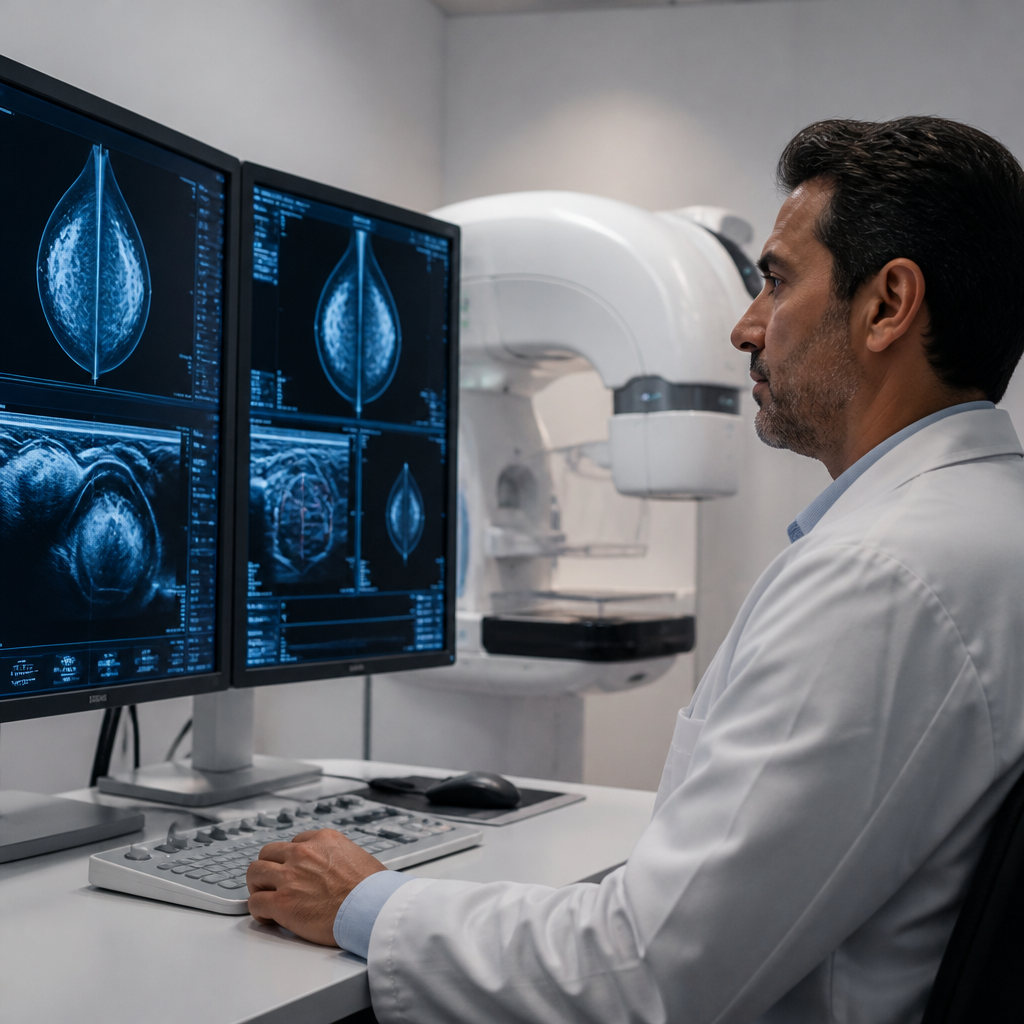
Breast cancer screening has long relied on mammography as the primary detection tool, but not all breast tissue responds equally well to standard imaging. For women with dense breast tissue, a family history of breast cancer, or inconclusive mammogram results, additional imaging techniques can provide the clarity needed for accurate diagnosis and peace of mind. Understanding when and why advanced imaging becomes necessary helps patients make informed decisions about their breast health care.
The Limitations of Standard Mammography
Traditional mammograms use X-rays to detect abnormalities in breast tissue, and they remain highly effective for many women. However, mammography faces challenges when imaging dense breast tissue, which appears white on mammograms—the same color as potential tumors. This overlap can obscure small cancers or lead to false alarms that require additional testing. Studies indicate that mammography sensitivity drops from approximately 85-90% in women with fatty breast tissue to around 60-70% in those with extremely dense breasts.
Dense breast tissue affects roughly 40-50% of women undergoing mammography screening. Beyond density issues, standard mammograms may also miss cancers in women with breast implants, those who have had previous breast surgery, or individuals with certain types of aggressive cancers that don’t form distinct masses. These limitations don’t diminish mammography’s value as a frontline screening tool, but they highlight situations where supplementary imaging becomes clinically appropriate.
Ultrasound as a Supplementary Tool
Breast ultrasound uses sound waves rather than radiation to create images of breast tissue. This technology excels at distinguishing fluid-filled cysts from solid masses, making it particularly useful for evaluating palpable lumps or abnormalities detected on mammograms. Ultrasound doesn’t require compression like mammography, which some patients find more comfortable, and it can be performed on pregnant women without radiation concerns.
The technique works well for targeted examination of specific areas but has limitations as a whole-breast screening method. Ultrasound interpretation depends heavily on operator skill, and it can miss microcalcifications—tiny calcium deposits that sometimes indicate early cancer. For women with dense breasts, automated whole-breast ultrasound systems have emerged as screening adjuncts, though they increase false positive rates and may lead to unnecessary biopsies.
Advanced Magnetic Resonance Imaging for High-Risk Cases
Magnetic resonance imaging represents the most sensitive breast imaging technology currently available, particularly valuable for women at elevated cancer risk. MRI creates detailed images using magnetic fields and radio waves, detecting cancers that other modalities might miss. The procedure typically involves an intravenous contrast agent that highlights areas of increased blood flow, a characteristic of many cancers. For patients requiring this level of diagnostic precision, breast mri with contrast provides comprehensive visualization of breast tissue architecture and any suspicious lesions that warrant further investigation.
Clinical guidelines recommend breast MRI screening for women with a lifetime breast cancer risk exceeding 20%, those with BRCA1 or BRCA2 genetic mutations, individuals with a strong family history of breast or ovarian cancer, and women who received chest radiation therapy between ages 10 and 30. MRI may also be used to evaluate the extent of known cancer before surgery, monitor response to chemotherapy, or assess breast implant integrity. The high sensitivity of MRI comes with trade-offs: the procedure takes 30-45 minutes compared to minutes for mammography, costs significantly more, and produces more false positives that require follow-up.
Molecular Breast Imaging and Emerging Technologies
Newer functional imaging approaches focus on metabolic activity rather than structural appearance. Molecular breast imaging uses small amounts of radioactive tracer that accumulates in cancer cells, creating images based on cellular function. This technique shows promise for detecting cancers in dense breast tissue with sensitivity approaching that of MRI but at lower cost and with shorter procedure times. However, it does involve radiation exposure and remains less widely available than established modalities.
Three-dimensional mammography, also called tomosynthesis, represents an evolution of standard mammography. By taking multiple X-ray images from different angles and reconstructing them into thin slices, 3D mammography reduces the masking effect of overlapping tissue. Research shows this approach detects 20-65% more invasive cancers than conventional 2D mammography while reducing false positives. Many integrated health systems have adopted tomosynthesis as their standard screening approach, recognizing its improved performance across diverse patient populations and clinical settings.
Making Imaging Decisions in the UAE Healthcare Context
For residents and expatriates in the United Arab Emirates, accessing appropriate breast imaging involves understanding both clinical recommendations and insurance coverage parameters. Most health insurance plans cover annual screening mammography for women over 40, but coverage for supplementary imaging varies by policy and clinical indication. Women identified as high-risk or those with abnormal screening results typically receive coverage for advanced imaging, but policies differ in their criteria and prior authorization requirements.
The UAE’s healthcare infrastructure includes facilities equipped with state-of-the-art imaging technology, particularly in Abu Dhabi and Dubai. However, out-of-pocket costs for elective or supplementary imaging can be substantial. When considering imaging options, patients should review their insurance policy details and understand what preventive and diagnostic services their coverage includes, especially since screening recommendations may differ slightly from Western guidelines based on local population characteristics.
Interpreting Results and Next Steps
Breast imaging results are typically reported using the Breast Imaging Reporting and Data System (BI-RADS), which categorizes findings from 0 (incomplete assessment) through 6 (known biopsy-proven malignancy). Categories 1 and 2 indicate normal or benign findings requiring only routine follow-up. Category 3 suggests probably benign findings warranting short-interval follow-up imaging in six months. Categories 4 and 5 indicate suspicious or highly suspicious abnormalities that require tissue biopsy for definitive diagnosis.
Understanding this classification system helps patients contextualize their results and expected follow-up. A callback for additional imaging after screening doesn’t necessarily indicate cancer—the majority of diagnostic workups conclude with benign findings. However, when biopsy is recommended, proceeding promptly ensures that any cancer is detected at the earliest, most treatable stage. Core needle biopsy performed with imaging guidance provides tissue samples with minimal invasiveness and typically definitive results within days.
Balancing Screening Benefits and Potential Harms
While advanced imaging technologies offer improved cancer detection, they also introduce considerations around overdiagnosis and patient anxiety. More sensitive imaging finds more abnormalities, including some slow-growing cancers that might never have caused symptoms during a woman’s lifetime. This detection can lead to treatment of cancers that weren’t destined to be life-threatening, subjecting patients to surgery, radiation, or chemotherapy unnecessarily.
Patients and physicians must weigh these factors against individual risk profiles. Women at high genetic or familial risk clearly benefit from intensive surveillance, as their likelihood of developing aggressive cancer justifies the screening intensity. For average-risk women, standard mammography supplemented by clinical breast examination provides an appropriate balance for most. The decision to pursue additional imaging should stem from informed discussion about personal risk factors, breast density, and tolerance for uncertainty rather than from a blanket “more is better” approach.
Building a Personalized Screening Strategy
Effective breast cancer screening requires collaboration between patient and healthcare provider to develop an individualized plan. This conversation should address family history, genetic testing results if available, breast density from previous mammograms, and personal preferences regarding screening intensity. Women with dense breasts should specifically discuss whether supplementary ultrasound or abbreviated MRI protocols might be appropriate additions to their screening regimen.
Consistency matters as much as technology choice. Establishing a regular screening schedule and maintaining records of previous imaging allows radiologists to detect subtle changes over time. When possible, having imaging performed at the same facility using the same equipment provides the most reliable comparison. For expatriates and international patients, maintaining copies of imaging studies and reports ensures continuity when transitioning between healthcare systems or countries.
