

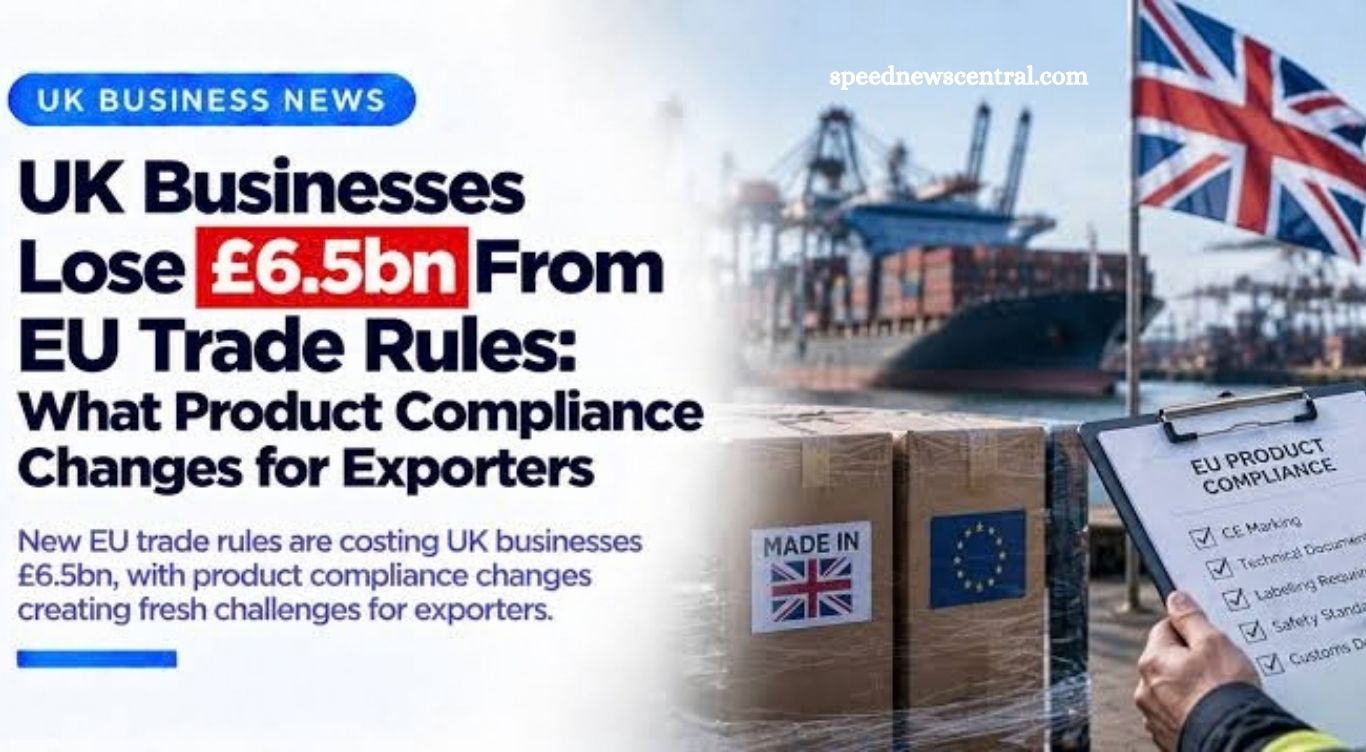
The United Kingdom continues to face challenges in its trading relationship with the European Union as businesses deal with changing product regulations, rising compliance costs, and complex export requirements. Since Brexit, companies selling goods across European markets have had to navigate additional rules that affect how products are manufactured, labelled, certified, and delivered.
Trade between the UK and EU remains important for both economies. However, new regulatory requirements and administrative barriers can make cross-border business more expensive, particularly for small and medium-sized enterprises. As companies struggle to adapt, concerns are growing over lost sales, reduced competitiveness, and billions of pounds in potential trade losses.
Read More: US Treasury Markets Face Fresh Pressure as Investors Reassess Interest Rates
Why UK-EU Trade Faces Growing Challenges
The UK and EU maintain strong commercial connections across industries such as manufacturing, food production, chemicals, automotive parts, and consumer goods. British businesses depend on European customers, while EU companies rely on the UK as an important export destination. Any increase in trade barriers can therefore affect suppliers, manufacturers, retailers, and consumers on both sides.
Following Brexit, businesses trading with the EU have faced changes in customs procedures, documentation, product standards, and regulatory responsibilities. Although some companies have successfully adjusted, others continue to experience delays and additional expenses. These challenges can make British products less competitive compared with goods supplied by businesses operating within the EU single market.
The financial impact extends beyond direct export costs. Companies may need to invest in new compliance systems, hire specialists, update packaging, or change suppliers to meet different requirements. For businesses operating with limited profit margins, these expenses can influence decisions about whether to continue selling in European markets.
New Product Rules Create Additional Pressure
Product regulations play an important role in protecting consumers, maintaining quality standards, and ensuring environmental safety. However, differences between UK and EU requirements can create difficulties for businesses that want to sell the same products in both markets.
Companies may need to review product testing, safety documentation, labelling requirements, conformity assessments, and other regulatory obligations. Depending on the product category, businesses might also need additional certification or support from authorised representatives. These responsibilities can increase the time and money required to launch products or maintain existing sales.
Regulatory changes can be especially challenging when businesses receive limited time to prepare. Manufacturers may need to redesign packaging, update technical documents, or modify production processes before continuing exports. Missing a deadline or misunderstanding a requirement can lead to delayed shipments, rejected products, or additional costs.
For exporters already managing inflation, energy expenses, and uncertain consumer demand, these requirements create another layer of commercial pressure.
How Brexit Has Changed Business Operations
Brexit introduced new trading arrangements between the UK and EU, changing how many businesses manage international sales. Companies exporting goods must understand the rules that apply to their products, including customs declarations, import requirements, and relevant safety standards. These procedures can increase administrative workloads and make international supply chains more difficult to manage.
Large companies often have dedicated compliance teams and greater financial resources to handle regulatory changes. Smaller businesses may lack the staff, time, and budget needed to manage complex requirements. As a result, some firms may reduce their European sales, increase prices, or focus on domestic customers instead. These decisions can limit business growth and reduce the range of products available to European buyers.
Small Businesses Face the Greatest Difficulties
Small and medium-sized enterprises are particularly vulnerable to additional trade costs. Unlike major manufacturers, smaller exporters may not have enough sales to spread compliance expenses across large product volumes. Even relatively modest increases in shipping, certification, and administrative costs can reduce their profit margins.
Some businesses may decide that exporting to the EU is no longer commercially practical. Others may continue trading but pass higher expenses on to customers through increased prices. Both outcomes can affect competitiveness, especially when European buyers can choose from alternative suppliers operating within the single market. Over time, reduced market access could discourage investment and make international expansion more difficult for British companies.
Economic Consequences of Reduced Trade
Lower trade volumes can affect employment, business investment, and economic growth. When exporters lose European customers, manufacturers may produce fewer goods, suppliers may receive fewer orders, and logistics companies may experience reduced demand. These effects can spread throughout the wider economy, particularly in sectors that depend heavily on international supply chains.
However, the value of lost trade must be assessed carefully. A decline in exports, an increase in regulatory costs, and a reduction in potential economic output are different measures. They should not automatically be treated as equivalent to billions of pounds in direct financial losses. Reliable figures require clear definitions, an identified time period, and evidence showing how much of the decline can be linked to specific trade barriers.
What the UK Government Can Do
Improving cooperation with the EU could help reduce unnecessary barriers for British exporters. Greater regulatory alignment in selected sectors, simpler documentation, and clearer guidance on product requirements could make cross-border trade easier. Any agreement would need to balance commercial benefits with the UK’s regulatory priorities and the EU’s own legal requirements.
The government can also support businesses through practical guidance, export training, and improved access to compliance information. Small companies would benefit from early warnings about regulatory changes, straightforward certification guidance, and assistance understanding the requirements of individual European markets. Better preparation could reduce avoidable errors and help businesses maintain valuable customer relationships.
How Businesses Can Adapt to Changing EU Rules
Businesses can reduce uncertainty by regularly reviewing the rules that apply to their products. Exporters should confirm applicable labelling standards, safety documentation, certification requirements, customs procedures, and implementation deadlines before shipping goods. Working with qualified customs advisers or product compliance specialists can help companies identify potential problems before they become expensive delays.
Diversifying sales markets may also improve long-term resilience. While the EU remains a significant destination for British exports, businesses can explore opportunities in other international markets without abandoning established European customers. Investing in digital compliance systems, maintaining accurate product records, and communicating regularly with distributors can further strengthen operations as regulations evolve.
Frequently Asked Questions
Why is UK-EU trade declining?
Brexit-related procedures, customs requirements, and regulatory differences have increased challenges for some British exporters.
How do new EU product rules affect UK businesses?
Businesses may need updated labels, safety documents, testing, and certification to meet EU requirements.
Are small UK businesses affected more severely?
Yes, smaller businesses often struggle with additional compliance costs and limited administrative resources.
How much money has the UK lost in EU trade?
The financial impact varies by study, period, and measurement method; exact losses require reliable evidence.
Can UK companies still export products to the EU?
Yes, UK companies can export goods by meeting applicable customs procedures and EU product regulations.
Which industries face EU trade challenges?
Manufacturing, food production, automotive, chemicals, and consumer goods may face additional compliance requirements.
How can UK businesses reduce trade costs?
Businesses can prepare documentation early, monitor regulatory changes, seek expert guidance, and improve export processes.
Conclusion
The UK’s trade relationship with the European Union continues to face challenges as new product rules and regulatory requirements increase pressure on businesses. Rising compliance costs, complex procedures, and changing standards can affect exporters, particularly small companies. Stronger UK-EU cooperation, clearer regulations, and better business preparation could help reduce trade barriers, protect export opportunities, and support long-term economic growth.
