

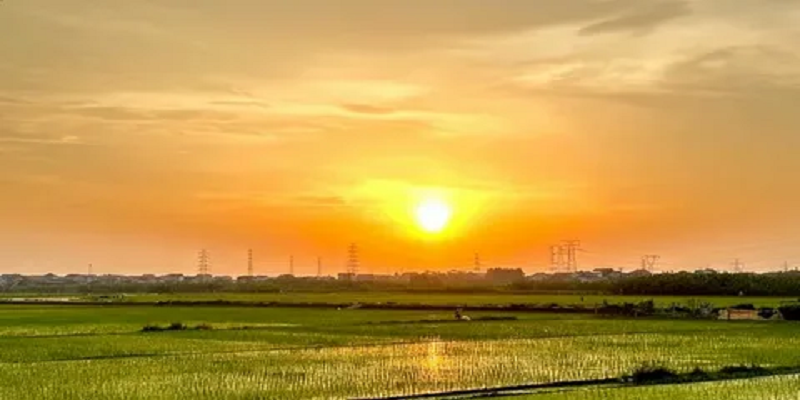
Sunset photonot only captures the moment but also preserves the profound emotion of the transition between day and night. This article nowgoal will analyze two main aspects: physical nature and mining techniques.image rumorA time to explore practical applications in fine art photography and visual communication.
The physical nature of sunset photography
Sunset is a complex optical phenomenon when sunlight passes through the thickest layer of the atmosphere.Image surchargedepends on light angle, humidity, and dust particles to create a unique color spectrum. Learn more bảng xếp hạng bóng đá right away.
The mechanism of scattering and refraction that creates sunset colors
Sunlight at an angle below 10° must pass through about 40 times more atmosphere than at the top, increasing Rayleigh scattering by up to 90%. Short wavelengths such as blue and violet are scattered strongly, leaving only long red-orange wavelengths (620–750 nm) to dominate, creating the characteristic warm colors of sunset. In addition, fine PM2.5 dust particles in the air act as a natural filter, increasing color saturation by 25–35%.
Sunset photoThe sun is also affected by refraction, which causes the sun to appear about 15% flatter and its position to be 0.5° off its actual position. During the last 30 minutes of the day, the color temperature drops rapidly from about 5500K to 2000K–2500K, creating a soft gradient from bright yellow to deep red. The combination of these physical factors brings a magical beauty and deep emotion to each sunset frame.
The influence of terrain and weather on sunset photos
In the highlands at about 3000m, the air density is reduced by about 30%, making the scattered sunlight weaker and the sunset time is extended by 8-12 minutes. The coastal area has a thin layer of salt fog that reflects light, increasing the illuminance on the water surface by up to 40%, creating a characteristic shimmering color. These natural conditions givesunset photoclear beauty and special spatial depth.
Cirrus clouds at around 8,000m act as a diffuser, sometimes creating a “fire rainbow” phenomenon with a polarization angle of around 22°, creating a brilliant color effect in the sky. After rain, the clearer air reduces scattering, making the sunset sharp but the color saturation only reaches around 60%. When the wind is strong at level 4-5, the cloud clusters move quickly, forming a dynamic and dramatic light strip in the sunset frame.
Professional sunset photography techniques
Photographers turn 20–40 minutes of sunset into a golden opportunity to create epic workso.Image boatIt requires careful preparation and the ability to read clearly on the fly.
Choose the optimal time and location
Sunset timeofficially begins when the sun just touches the horizon, but the stagecivil twilightlasting about 30 minutes and then maintaining an illumination of 3–10 lux, enough to capture details without artificial light. ApplicationPhotoPillshelps photographers predict this moment accurately with an error of less than 1 minute. The high terrain to the west within a range of 10–15 km creates a naturally dark background, highlighting the golden-orange glow of the setting sun.
When shooting from a height of 100–200m above the subject, the depth of field increases by about 25%, making the frame more open and balanced. Techniquesilhouettecommonly used insunset photo, place the subject in a dark area to create a strong contrast with the sky. The ideal light:dark ratio is 1:16, which gives a dramatic feel and conveys a romantic, quiet feeling to the photo.
Camera settings and post-processing for sunset photos
To recordimageFor optimal light range and detail, photographers should shoot in formatRAW 14-bit, which helps keep the dynamic range up to 12–14 stops. UseISO 100–200carbon tripod combination helps stabilize the frame when shooting below 1/15s speed, while the aperturef/8–f/11Ensures maximum sharpness and minimizes diffraction.

FilterND gradient 0.9is used to balance the brightness between the sky and the ground in a 4:1 ratio, making the sunset image more harmonious. During post-production withLightroom, may increasevibrance +30to highlight warm tones while reducinghighlights -70to keep cloud detail.
Conclude
From ancient physical phenomenon to modern cultural icon,sunset photoremains an endless source of inspiration for creators. Despite ever-advancing photographic technology, the raw appeal and emotional power ofimage The future belongs to the fusion of digital and natural moments, where each frame continues to tell stories of transition, hope, and the ephemeral beauty of the world.
