

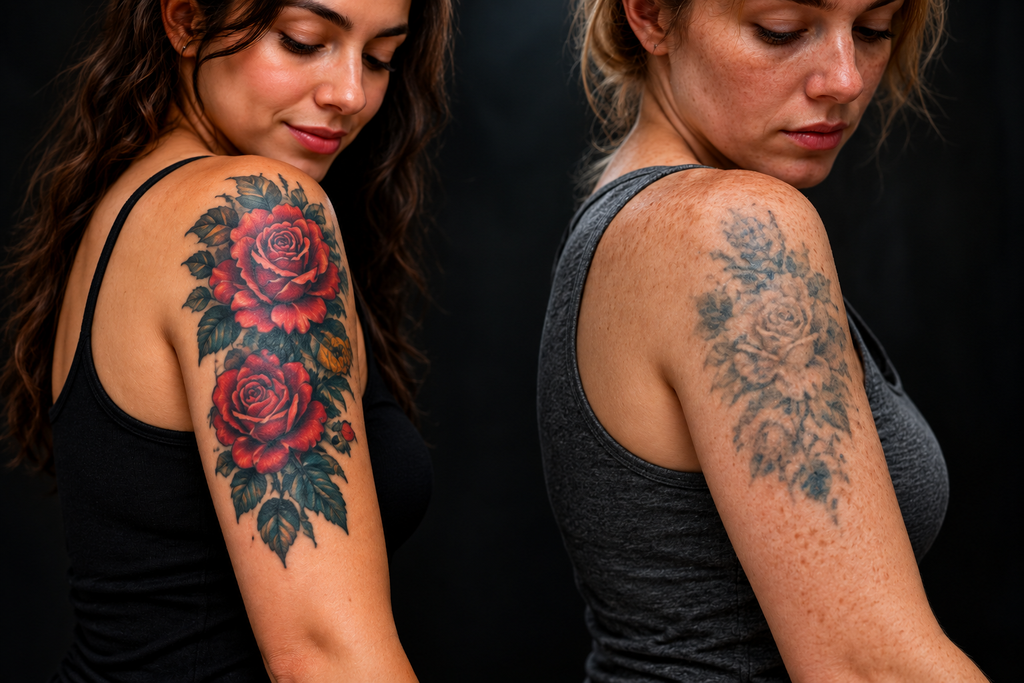
Two people can receive tattoos of similar size and style yet see different results after healing. One tattoo may remain crisp and saturated, while another may appear lighter or lose some detail over time. Differences in skin characteristics, tattoo technique, healing, placement, and sun exposure can all influence how well tattoo ink maintains its appearance.
Why Skin Can Affect Tattoo Results
Tattoo ink is deposited into the dermis, a layer of skin beneath the surface. The body responds to the tattooing process as a controlled injury, and some pigment becomes retained within skin cells. Individual differences in how the skin responds and heals can therefore influence the final appearance of a tattoo.
Skin condition and tattoo placement can also play a role. Areas that experience frequent friction, movement, or irritation may present different challenges during healing. The size and complexity of the tattoo can matter as well, particularly when a design requires multiple sessions.
Healing and Aftercare Matter
The healing process is one of the factors tattoo clients can influence. During the first few weeks, excessive scratching, picking at scabs, or repeatedly irritating the area can interfere with normal healing. Gentle cleansing, appropriate moisturizing, and minimizing unnecessary friction can help support the skin while it recovers.
However, proper aftercare does not mean every tattoo will heal identically. Individual healing responses vary, and some differences in the finished tattoo may occur even when two people follow similar aftercare routines.
Sun Exposure Can Change a Tattoo Over Time
Ultraviolet (UV) exposure is another important factor in tattoo longevity. Repeated exposure to sunlight can gradually cause tattoo pigments to fade, making colors appear less vibrant and some details less defined.
People who spend considerable time outdoors may notice these changes more quickly if their tattoos are regularly exposed to sunlight. Protecting tattooed skin with broad-spectrum, water-resistant sunscreen rated SPF 30 or higher, along with shade or protective clothing when appropriate, can help reduce unnecessary UV exposure.
Tattoo Technique and Placement Also Matter
The artist’s technique can influence how a tattoo looks after healing. Ink needs to be deposited at an appropriate depth within the skin. Differences in application technique can affect pigment retention and the appearance of the finished design.
Placement is another consideration. Areas such as the hands and feet can experience frequent movement, friction, washing, and environmental exposure. Tattoos in these locations may therefore require different expectations regarding long-term appearance.
Larger or highly detailed tattoos may also require multiple sessions, giving the skin additional time to recover between appointments. Discussing the design, placement, expected healing process, and aftercare requirements with an experienced tattoo artist can help clients understand what to expect.
Ultimately, there is no single reason why one person’s tattoo may retain ink better than another’s. Skin characteristics, application technique, tattoo placement, healing, aftercare, and long-term sun exposure can all contribute to how a tattoo looks as it ages.
For those considering a tattoo in St. Petersburg, Florida, Black Amethyst Tattoo Gallery is a local option worth exploring. J Michael Taylor, artist and owner of Black Amethyst, takes an art-focused approach to custom tattooing, working with clients to develop personalized designs based on their ideas, preferred style, and overall vision for the piece.
